

Rhodiola Supplements

Some filters could not be applied and were reset.
-
 Sale Herbs Of Gold Stress Ease $32.40
Regular price $54.00Add to cart -
 Sale Carusos Rhodiola One A Day $55.95
Regular price $64.00Add to cart -
 Sale Natures Sunshine Rhodiola Relax $62.95
Regular price $69.90Add to cart -
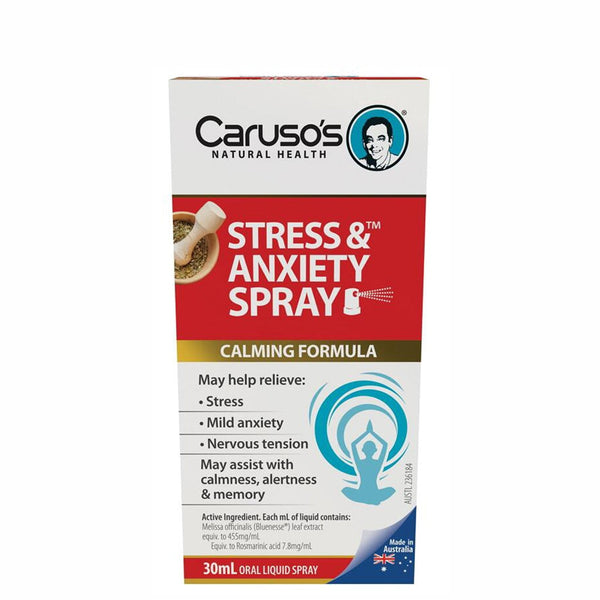 Carusos Stress & Anxiety Spray $29.95 Add to cart
-
 Sale Switch Nutrition Saffron+Rhodiola $47.96
Regular price $59.95Add to cart


Rhodiola Supplements Information
Always read the label and follow the directions for use.
Rhodiola at a Glance
Shop by type
Rhodiola sits beside other stress herbs: Ashwagandha Supplements, Stress Relief Vitamins, Stress & Mood Supplements, Cognition & Focus Support and St John's Wort.
Compare rhodiola by strength
| Product | Rhodiola extract a day | Dry root equivalent a day | Rosavins a day | Salidroside a day | Label dose |
|---|---|---|---|---|---|
| Herbs of Gold Stress Ease, 60 tablets | 200 mg | At least 800 mg | 6 mg | 4 mg | 1 twice daily |
| Caruso's Rhodiola One A Day, 50 tablets | 375 mg | 937.5 mg | 11.25 mg total | 3.75 mg | 1 daily |
| Nature's Sunshine Rhodiola Relax, 60 capsules | 400 mg | 1.6 g | 12 mg | Not stated | 1 twice daily |
| Switch Nutrition Saffron+Rhodiola, 60 capsules | 500 mg | 4 g | 15 mg | 5 mg | 2 daily |
Two figures help you compare strength. Rosavins are found almost only in Rhodiola rosea, and run from 6 mg to 15 mg a day across our range, with salidroside from 3.75 mg to 5 mg. The dry root equivalent tells you the amount of dried root used to make the extract, from 800 mg to 4 g a day. All four print their rosavins, and three also print salidroside. Check the pack for current prices.
Which rhodiola suits you?
- Rhodiola on its own, once a day: Caruso's, which is also labelled vegan.
- Rhodiola with ashwagandha: Stress Ease and Rhodiola Relax.
- Rhodiola with saffron: Switch Nutrition, labelled vegetarian.
Rhodiola is the daytime adaptogen. If winding down at night is your main concern, our Ashwagandha Supplements range may suit you better. For wider reading, see our guide to the best supplements for stress and anxiety.
What Does Rhodiola Do for Stress and Tiredness?
Rhodiola grows in cold, high places, and the root is the part used. It is also called rose root or Arctic root, and it has a long history in Russian and Scandinavian herbal medicine as an adaptogen, meaning a herb used to help the body cope with stress. Rhodiola can support a healthy stress response, relieve nervous tension and help relieve weariness, tiredness and fatigue. Caruso's Rhodiola One A Day can also support mental endurance and stamina, and mental concentration, focus and clarity.
It may suit you if work, study or family life has you under steady pressure, you tend to flag by mid-afternoon, or you like knowing exactly how much of the key compounds is in each tablet.
Does Rhodiola Work? What the Research Shows
The reviews are cautious. A 2011 review of 11 placebo-controlled trials found rhodiola may help physical and mental performance. But no single study had been repeated by a separate team.[2] A 2012 review of the same studies found every one had a high risk of bias or reporting flaws.[3] Neither review declared industry funding.
Stress and fatigue. In 60 adults with a diagnosed fatigue condition, 576 mg of extract a day for 28 days beat a dummy tablet on a burnout scale and three attention tests. Both groups improved on mood, so the placebo effect was large. The senior author is linked to the Swedish Herbal Institute, which made the extract.[4] In 56 doctors on night duty, 170 mg a day improved a fatigue score, but only in the first two weeks.[5]
Mild anxiety. In 80 mildly anxious people, 400 mg a day for 14 days was followed by lower anxiety, stress and anger scores. There was no placebo group, so the authors say cause and effect cannot be shown.[6]
Fitness. A 2026 review of nine trials in 424 healthy adults found no clear change in a lab measure of fitness. It declared no commercial ties.[7]
When and How Should I Take Rhodiola?
Follow the label, because our products differ. Most are taken once or twice a day with food. Take rhodiola in the morning, or early afternoon at the latest, because a late dose can make sleep harder for some people. Give it two to four weeks of steady use before you judge how it suits you.
In Australia, a listed rhodiola medicine can only use dry root powder, a water extract of it, or an extract made with water and no more than 70 per cent ethanol.[1]
Rhodiola Side Effects and Who Should Take Care
- Sleep. Take it earlier in the day if it keeps you awake.
- Feeling wired. Some people get a dry mouth or feel restless at higher doses. A smaller dose often settles it.
- Medicines. Ask your doctor or pharmacist before starting, especially for anything that acts on mood or blood pressure.
- Pregnancy and breastfeeding. Not recommended without medical advice.
- Surgery. Tell your surgeon, and ask when to stop.
- Licorice. Herbs of Gold Stress Ease contains licorice, which does not suit everyone. Read the pack.
- Under 18. Speak to your doctor first.
How Do I Choose a Rhodiola Supplement?
- Single herb or blend. Caruso's is rhodiola on its own, while the other three combine it with ashwagandha or saffron.
- Look for figures. Choose a pack that prints its rosavins and names Rhodiola rosea.
- Compare the daily amount using the dry root equivalent in the table.
- Check the dose frequency. Once a day is easiest to stick with.
- Look for an AUST L number. A listed medicine uses only TGA-approved low-risk ingredients, and the maker must hold evidence behind each claim on the pack.
- Ask first. Book a free 10-minute consult online, or walk in to any store, and a naturopath will help you choose. If symptoms persist, talk to your health professional.
References
- Therapeutic Goods (Permissible Ingredients) Determination (No. 3) 2026 (F2026L01382), item 4326, Rhodiola rosea. Available at: https://www.legislation.gov.au/F2026L01382 (Accessed: 4 November 2026).
- Hung, S.K., Perry, R. and Ernst, E. (2011) 'The effectiveness and efficacy of Rhodiola rosea L.: a systematic review of randomized clinical trials', Phytomedicine, 18(4), pp. 235 to 244. doi: 10.1016/j.phymed.2010.08.014. Indexed as receiving non-government research support; no competing interests stated.
- Ishaque, S., Shamseer, L., Bukutu, C. and Vohra, S. (2012) 'Rhodiola rosea for physical and mental fatigue: a systematic review', BMC Complementary and Alternative Medicine, 12, 70. doi: 10.1186/1472-6882-12-70. Indexed as receiving non-government research support; no competing interests stated.
- Olsson, E.M., von Schéele, B. and Panossian, A.G. (2009) 'A randomised, double-blind, placebo-controlled, parallel-group study of the standardised extract SHR-5 of the roots of Rhodiola rosea in the treatment of subjects with stress-related fatigue', Planta Medica, 75(2), pp. 105 to 112. doi: 10.1055/s-0028-1088346. No competing-interest statement appears in the bibliographic record; the senior author is associated with the Swedish Herbal Institute, which produced the SHR-5 extract tested.
- Darbinyan, V., Kteyan, A., Panossian, A., Gabrielian, E., Wikman, G. and Wagner, H. (2000) 'Rhodiola rosea in stress induced fatigue: a double blind cross-over study of a standardized extract SHR-5 with a repeated low-dose regimen on the mental performance of healthy physicians during night duty', Phytomedicine, 7(5), pp. 365 to 371. doi: 10.1016/S0944-7113(00)80055-0. No competing-interest statement appears in the bibliographic record; two co-authors are associated with the Swedish Herbal Institute.
- Cropley, M., Banks, A.P. and Boyle, J. (2015) 'The effects of Rhodiola rosea L. extract on anxiety, stress, cognition and other mood symptoms', Phytotherapy Research, 29(12), pp. 1934 to 1939. doi: 10.1002/ptr.5486. Non-US-government research support; no competing interests stated. The product tested was the commercial preparation Vitano. The trial had no placebo group and the authors state that causality cannot be determined.
- Mou, J., Yin, J., Fan, L., Zhang, W., He, J. and Sun, H. (2026) 'Antioxidant but not ergogenic or altitude-protective: a meta-analysis of Rhodiola species in healthy adults', Frontiers in Physiology, 17, 1908897. doi: 10.3389/fphys.2026.1908897. The authors declare the work was conducted without any commercial or financial relationships.