

Magnesium L-Threonate
Some filters could not be applied and were reset.
-
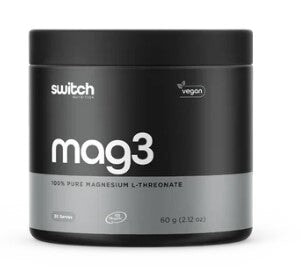 Sale Switch Nutrition Mag3 Magnesium L-Threonate Powder $39.96
Regular price $49.95Add to cart -
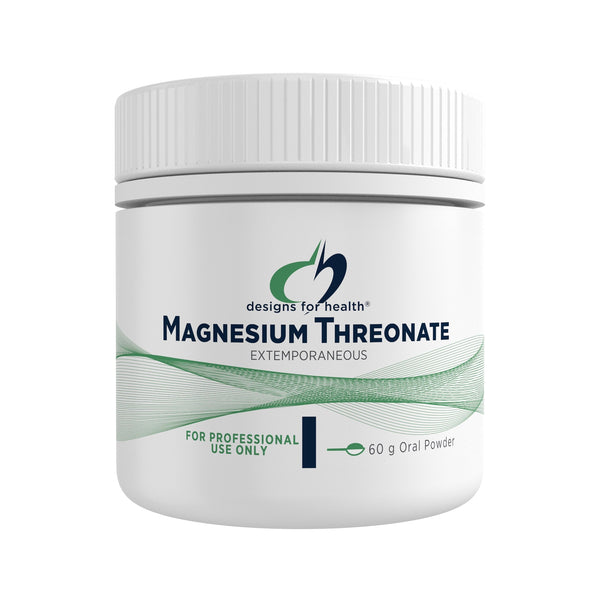 Designs for Health Magnesium Threonate Oral Powder $74.95 Add to cart
-
 Sale Apollo Magnesium L-Threonate $59.45
Regular price $69.95Add to cart -
 Sale Primabolics Magnesium L-Threonate $54.95
Regular price $59.95Add to cart -
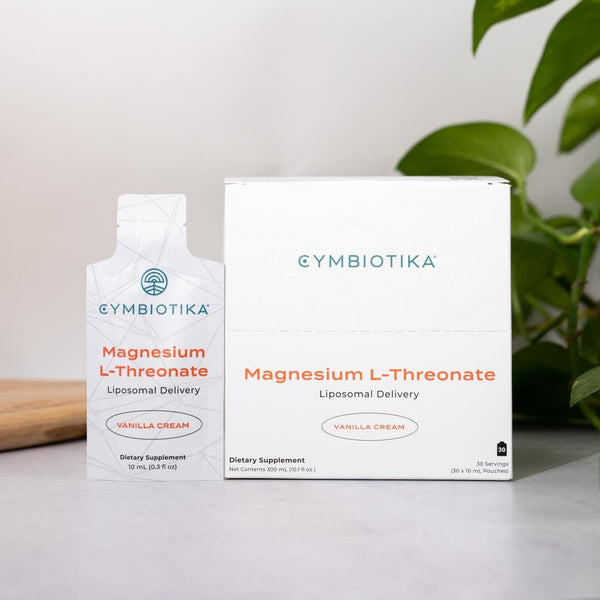 Cymbiotika Magnesium L-Threonate $119.95 Add to cart


Magnesium L-Threonate Information
Always read the label and follow the directions for use.
Powder or Capsules? Magnesium L-Threonate at a Glance
Pick by format: Switch Nutrition Mag3 Magnesium L-Threonate Powder is an unflavoured powder you stir into a drink, and Apollo Magnesium L-Threonate is a capsule that also contains L-theanine and apigenin. Looking for other forms? Compare all magnesium supplements or browse sleep support.
| Format | Magnesium you actually get | Typical price |
|---|---|---|
| Powder | About 76 mg in a 1 g scoop, up to 144 mg in a 2 g serve | About $40 to $75 |
| Capsules | About 144 mg in a serve of three capsules | About $55 to $60 |
Which format suits you?
Powder lets you adjust the amount you take within the label directions and has no capsule shells, while capsules are quicker to take and travel well. If you also take L-theanine or apigenin, count the amounts in the Apollo capsules before adding more.
How Much Magnesium Is Actually in Magnesium L-Threonate?
The magnesium is attached to L-threonic acid, a bulky partner molecule, so only about 7% to 8% of the powder is magnesium. A 2,000 mg serve gives roughly 144 mg of magnesium and a 1 g scoop roughly 76 mg. A glycinate or citrate capsule can supply a similar amount of magnesium from a much smaller dose.
That is why the line to read on the label is the equivalent (elemental) magnesium per serve, not the total weight of the powder.
Does Magnesium L-Threonate Help You Sleep? What the Research Says
Human research on this form is small. In one 21-day trial of 80 adults reporting sleep problems, people taking magnesium L-threonate scored better on some sleep measures than those taking a placebo.[2] The ingredient's seller, AIDP Inc., funded it and its employees co-authored the paper.
For magnesium in general, a review of three small trials in older adults (other forms) found people fell asleep about 17 minutes sooner than on placebo, and its authors graded the quality of that evidence as low or very low.[4] Nobody has compared L-threonate head to head with glycinate or citrate. The products in this range are not listed medicines and make no health claims.
Magnesium Threonate or Glycinate?
| L-threonate | Glycinate | |
|---|---|---|
| Partner molecule | L-threonic acid | Glycine, an amino acid |
| Magnesium by weight | About 7% to 8% | Higher, so smaller doses |
| Main sleep trial | 21 days, 80 adults, industry funded[2] | 28 days, 155 adults[6] |
| Cost per day | Usually higher | Usually lower |
If you mainly want more magnesium in your day, glycinate or citrate usually gives more per dollar. Our magnesium glycinate for sleep article goes through that option.
How Much Should I Take, and When?
Use the serve on your label. Most products direct about 1 g to 2 g of magnesium L-threonate once a day, and several suggest the evening. In Australia, listed medicines containing this ingredient are limited to adults and to no more than 3 g a day,[7] a handy upper guide for any product type.
Nutrient reference values set the ceiling for supplemental magnesium at 350 mg daily from age 9 upwards.[5] If you take more than one magnesium product, add up the elemental magnesium from each. Heavy training in hot conditions is the exception where people use more, and then it is worth checking with a practitioner.
Side Effects and Who Should Check First
Too much supplemental magnesium can cause diarrhoea, nausea and stomach cramps.[3] Talk to your doctor or pharmacist before taking it if you:
- Have kidney disease: reduced kidney function can let magnesium build up.[3]
- Take antibiotics: magnesium can reduce absorption of some, such as tetracyclines.[1]
- Are pregnant or breastfeeding: check with your doctor or midwife before any supplement.
These products are made for adults, not children or teenagers under 18.
Reading a Magnesium L-Threonate Label
- Product type: some are sold as foods or sports foods and follow food labelling rules. Listed medicines carry an AUST L number on the pack.
- Equivalent magnesium: the figure per serve that tells you how much magnesium you get.
- Directed age: confirm it is directed at adults.
- Extras: L-theanine or apigenin in some capsules.
Not sure which suits you? Our naturopaths give free advice in store and through the online 10-minute consultation.
References
- Gröber U, 2019, Int J Mol Sci 20(9):2094, review of magnesium and drug interactions. doi:10.3390/ijms20092094. Funding: none; no conflict declared.
- Hausenblas HA et al, 2024, Sleep Med X 8:100121, randomised placebo-controlled trial of magnesium L-threonate in adults with sleep complaints. doi:10.1016/j.sleepx.2024.100121. Funding: AIDP Inc., employees co-authored.
- Healthdirect Australia, 2025, patient information page on magnesium (accessed 5 November 2026).
- Mah J, Pitre T, 2021, BMC Complement Med Ther 21(1):125, meta-analysis of magnesium for insomnia in older adults. doi:10.1186/s12906-021-03297-z. Funding: no specific grant; no competing interests.
- NHMRC, magnesium entry of the Australian and New Zealand nutrient reference values (accessed 5 November 2026).
- Schuster J et al, 2025, Nat Sci Sleep 17:2027-2040, randomised placebo-controlled trial of magnesium bisglycinate for poor sleep. doi:10.2147/NSS.S524348. Funding: Leibniz University Hannover institute; supplement from Biogena; one author directs a contract research organisation funded by nutraceutical companies.
- Permissible Ingredients Determination (No. 3) 2026, instrument F2026L01382, item 3165 for magnesium L-threonate monohydrate; see legislation.gov.au.