

Magnesium Glycinate
Some filters could not be applied and were reset.
-
 MicroNutrition Magnesium Glycinate 750mg $34.95 Add to cart
-
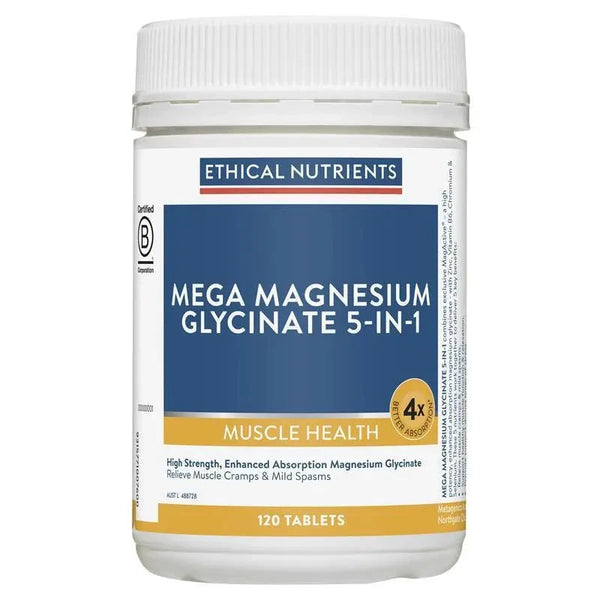 Sale Ethical Nutrients Mega Magnesium Glycinate 5 in 1 $24.37
Regular price $32.50Add to cart -
 Sale Switch Nutrition Mag Glycinate $31.96
Regular price $39.95Add to cart -
 Sale Primabolics Magnesium Glycinate 750mg $34.95
Regular price $39.95Add to cart -
 Sale Therapure My Pure Magnesium 180 Capsules $59.45
Regular price $60.55Add to cart -
 Sale Nutralife Magnesium Glycinate Powder $29.49
Regular price $58.99Add to cart -
 Sold out SpectrumCeuticals Buff Magnesium Glycinate $48.00
-
 Sold out Vitaceuticals Magzorb Magnesium Glycinate 100 Capsules $32.95
Regular price $33.00 -
 Sale New Nordic Active Magnesium Glycinate $50.95
Regular price $51.25Add to cart -
 Sold out Vitaceuticals Magzorb Magnesium Glycinate 240g Powder $34.95
Regular price $35.00 -
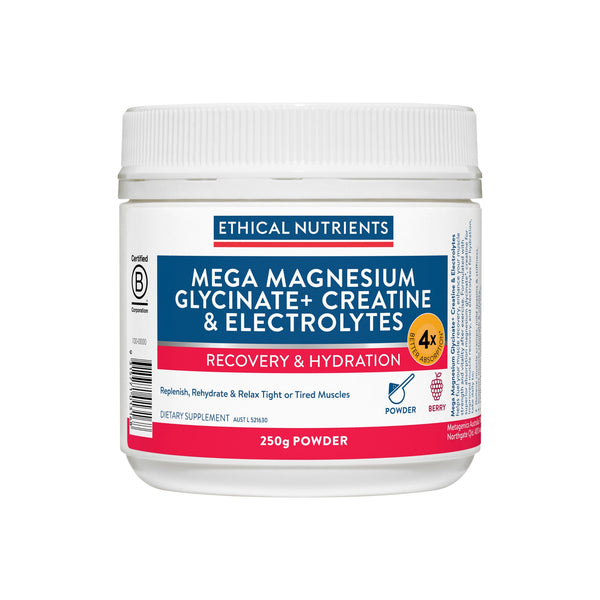 Sale Ethical Nutrients Mega Magnesium Glycinate+ Creatine & Electrolytes $34.46
Regular price $45.95Add to cart -
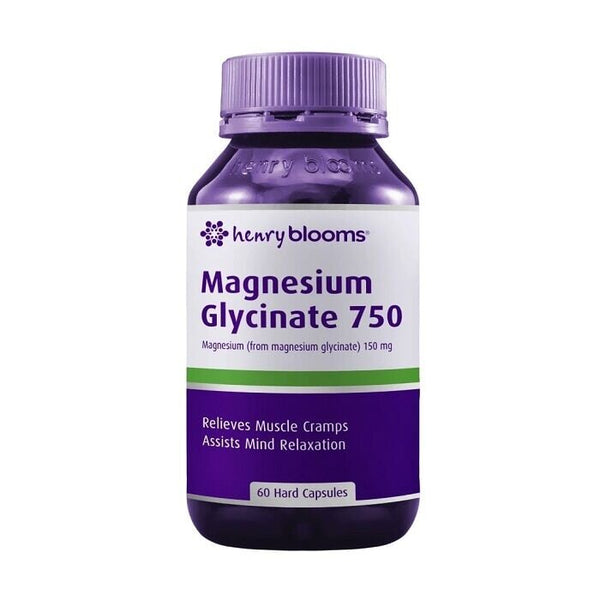 Sale Henry Blooms Magnesium Glycinate 750 60 Capsules $29.45
Regular price $29.50Add to cart -
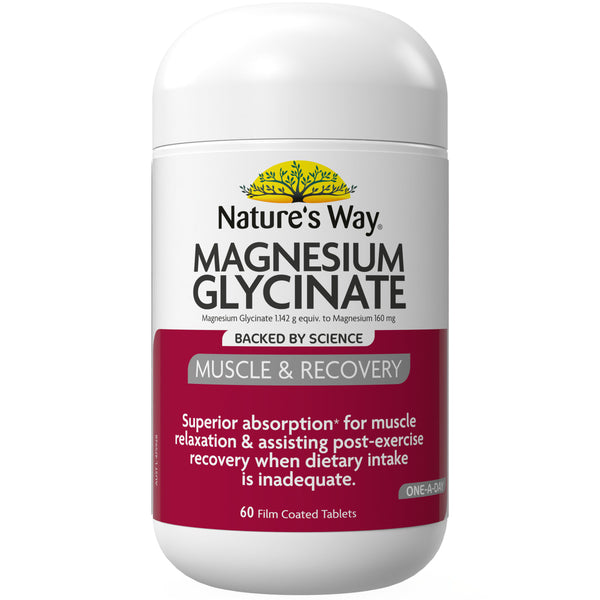 Sold out Natures Way Magnesium Glycinate 60 Tablets $22.95
Regular price $24.00 -
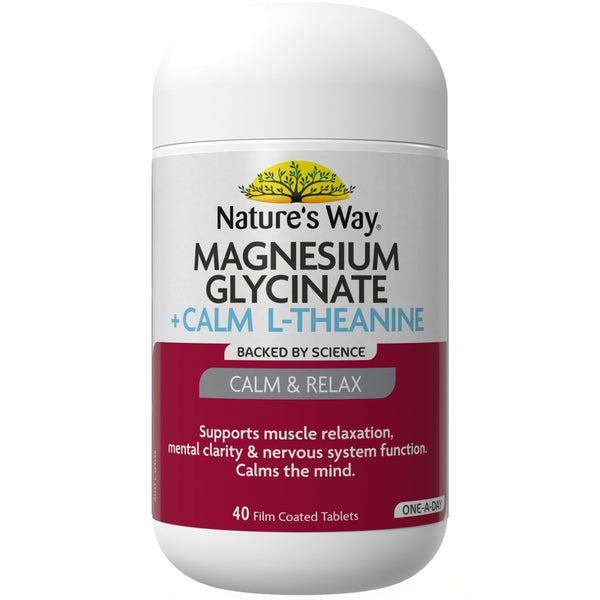 Sold out Natures Way Magnesium Glycinate Calm L-Theanine 40 Tablets $37.95
Regular price $40.00 -
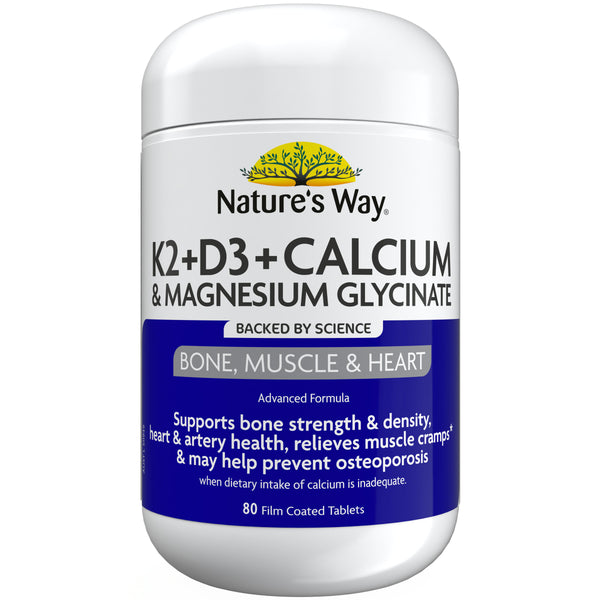 Sold out Natures Way K2D3CalciumandMagnesium Glycinate 80s $33.45
Regular price $35.00 -
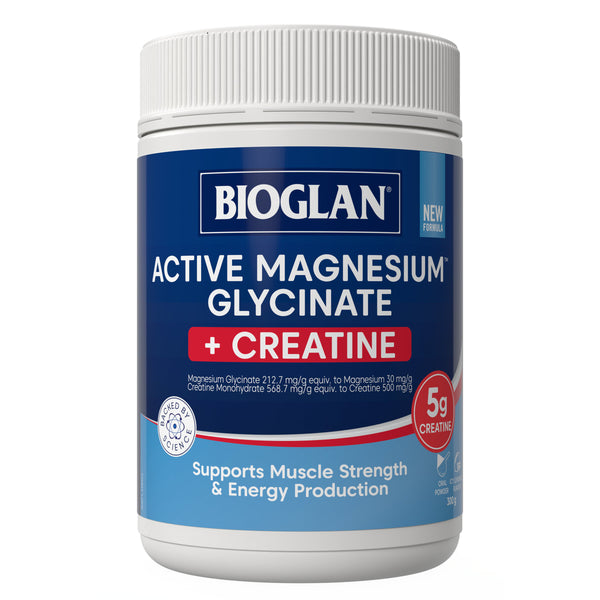 Sold out Bioglan Active Magnesium Glycinate Creatine 300g powder $35.95
Regular price $37.49 - Sold out Bioglan Vitamin K2 D3 Magnesium Glycinate $46.95
Regular price $48.99 -
 Sale Bioglan Active Magnesium Glycinate $46.95
Regular price $67.99Add to cart -
 Sale Nature's Way Magnesium Glycinate 200 Tablets $39.95
Regular price $49.99Add to cart -
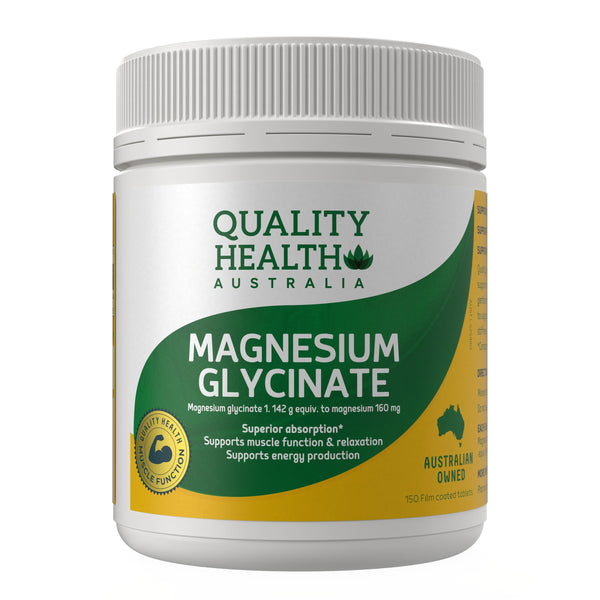 Sale Quality Health Magnesium Glycinate $29.95
Regular price $29.99Add to cart -
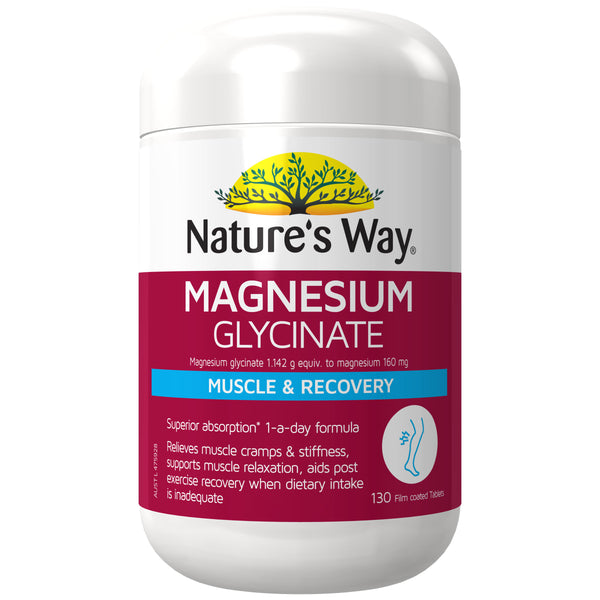 Sale Nature's Way Magnesium Glycinate 130 Tablets $32.95
Regular price $43.99Add to cart -
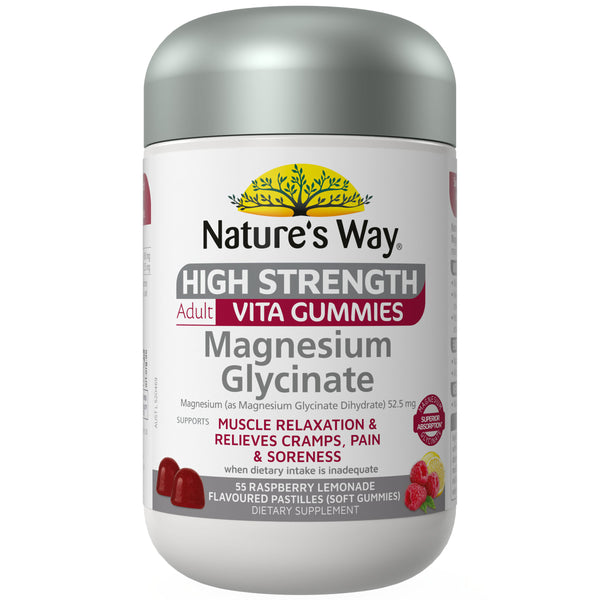 Sale Natures Way High Strength Adult Vita Gummies Magnesium Glycinate $24.95
Regular price $29.99Add to cart -
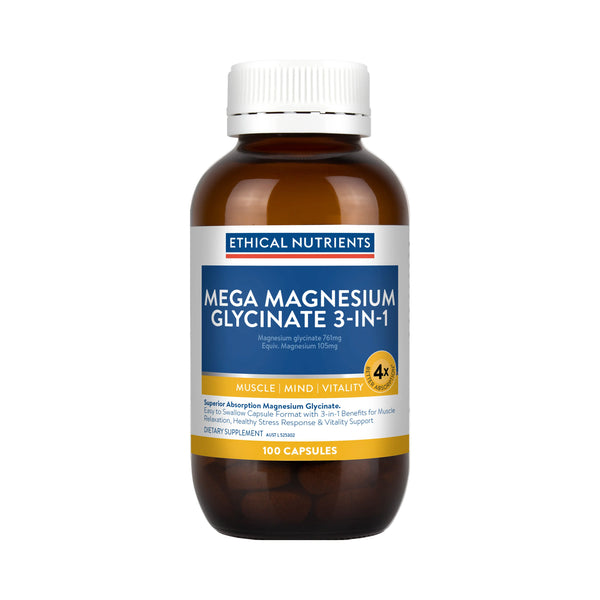 Sale Ethical Nutrients Mega Magnesium Glycinate 3 in 1 100 Capsules $43.01
Regular price $57.35Add to cart -
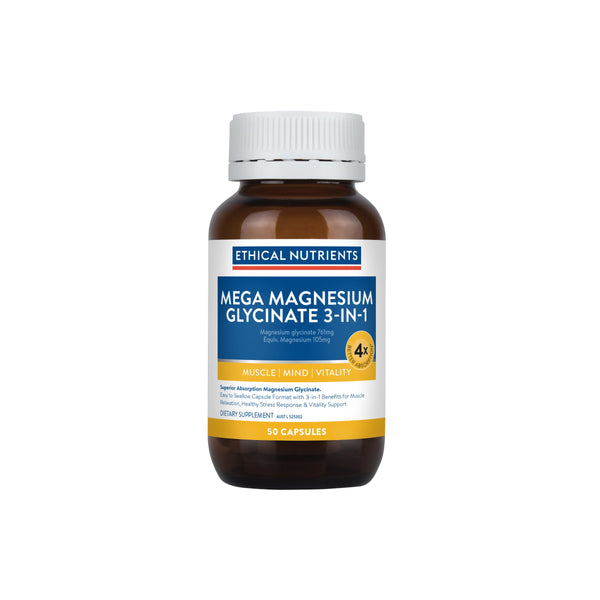 Sale Ethical Nutrients Mega Magnesium Glycinate 3 in 1 50 Capsules $25.42
Regular price $33.90Add to cart


Magnesium Glycinate Information
Always read the label and follow the directions for use.
Magnesium Glycinate by Type: Capsules, Powders, Sachets and Gummies
Shop by type: MicroNutrition Magnesium Glycinate 750mg and Therapure My Pure Magnesium for capsules, Ethical Nutrients Mega Magnesium Glycinate 5 in 1 for glycinate with other forms, Nutralife Magnesium Glycinate Powder for a drink, and Herbs of Gold Magnesium Glycinate ActivBeads for single-serve sachets. Every form: all magnesium supplements.
| Format | What you get | Typical price |
|---|---|---|
| Capsules and tablets | Glycinate on its own, or glycinate as the main form in a blend | About $20 to $58 |
| Powders and sachets | Flavoured powders to mix into water, some with added nutrients | About $12 to $30 |
| Gummies | A chewable option for adults who prefer not to swallow tablets | About $25 a pack |
Prices cover in-stock products only and move often. MicroNutrition Magnesium Glycinate 750mg is our lead pick: it is the best seller of the range and, as a listed medicine, carries label indications for sleep, nervous system and bone health.[9]
Which Format Fits Your Routine?
- Capsules or tablets: the simplest way to keep a fixed nightly dose, and single-form capsules make it easy to tally what you take.
- Blends: choose one if you want glycinate alongside other magnesium forms in a single tablet.
- Powder or sachets: a drink you can adjust to taste, handy if capsules are a chore.
- Gummies: a chewable alternative, so check the label for sweeteners.
- Several capsules have no added vitamin B6, which helps if you already take B6 elsewhere.
Why Does a 750 mg Capsule Only Give 150 mg of Magnesium?
The 750 mg is the weight of the whole compound, magnesium plus glycine. Elemental magnesium is the magnesium itself, and that figure is what you should compare across brands. A capsule of magnesium glycinate 750 mg gives 150 mg of magnesium.[9] Look for "equiv. magnesium" or "elemental magnesium" on the label, then multiply by the number of capsules you take each day.
What Is Magnesium Bisglycinate?
Magnesium is an essential mineral that supports hundreds of enzyme systems in the body, among them energy production, muscles and nerves.[4][7] Your body cannot make it, so it comes from food or supplements. In glycinate, magnesium is bound to glycine, an amino acid. Bisglycinate means two glycine molecules per magnesium, and labels use both names for the same family of ingredients.
Magnesium Glycinate vs Citrate: Which Should You Take?
Head-to-head trials of the two are limited, so the choice usually comes down to how each suits you.
| Glycinate | Citrate | |
|---|---|---|
| Bound to | Glycine, an amino acid | Citric acid |
| Research | Used in a recent 28-day sleep trial[8] | In a direct comparison it dissolved and absorbed better than magnesium oxide[5] |
| Stomach | Check the label and take with food if needed | Larger doses can loosen stools |
| Magnesium per capsule | About 100 mg to 160 mg | About 139 mg to 146 mg |
The form you tolerate and remember to take matters more than small absorption differences.
Does Magnesium Glycinate Help You Sleep?
Diet comes first, and a supplement fills gaps. The ABS found that in 2023 about 31% of Australians (aged 2 and over) fell short of the magnesium they need from food and drink.[1] Research on glycinate itself is still small.
- Poor sleepers: a 28-day trial gave 155 adults with poor sleep 250 mg of magnesium as bisglycinate or a placebo, a dummy pill. Sleep scores improved slightly more on magnesium, and people who ate less magnesium appeared to gain most.[8]
- Older adults: pooling three small trials of 151 older adults, using assorted forms, the authors reported falling asleep roughly 17 minutes sooner on magnesium than placebo, but graded the evidence low to very low quality.[6]
Read our magnesium glycinate for sleep guide for timing and dose, or browse sleep support and stress and mood supplements.
How Much Magnesium Glycinate to Take
Your label sets the dose. For context, the recommended daily intake is 310 to 320 mg for adult women and 400 to 420 mg for adult men, counting food and supplements together.[7] The supplement upper limit is 350 mg daily from age 9, and lower for younger children.[7] If you use more than one magnesium product, add them together.
Some labels direct higher doses. These tend to suit people replenishing what is lost through heavy sweating, long or hard training and hot conditions, often alongside electrolytes. Use as directed on the label, and talk to your health professional if you are pregnant, have a medical condition or take medication.
For sleep, many people take glycinate in the evening. The sleep trial ran for four weeks, so give it about that long before you judge it.[8]
Side Effects and Who Should Check First
Large supplement doses may bring on diarrhoea, nausea or cramps.[3] Food with the dose, or splitting it, often settles things. Check with your doctor or pharmacist first if you:
- Have kidney disease: reduced kidney function can let magnesium build up.[3]
- Take antibiotics: magnesium may interfere with how some (tetracyclines, for example) are absorbed, so ask your pharmacist about timing.[2]
- Take diuretics or reflux medicines: certain medicines in these groups lower magnesium levels.[2]
- Are pregnant or breastfeeding: ask your doctor or midwife before starting any supplement.
- Use a product containing vitamin B6: if you feel tingling, burning or numbness, stop and see your health professional.
Reading a Magnesium Glycinate Label
- AUST L number: marks a listed medicine on the Australian Register of Therapeutic Goods (ARTG). Listing allows only pre-approved, low-risk ingredients, and the TGA does not assess efficacy at listing.[10]
- Sports foods: some glycinate capsules are sold as sports foods. Their labels follow food rules and carry no AUST L number.
- Equiv. magnesium: multiply it by your daily dose.
- Other forms and extras: blends may add citrate, oxide or amino acid chelate, and powders and gummies may add B6, herbs, sweeteners or flavours.
Unsure which to pick? Our store team give free advice to walk-ins, and an online 10-minute consultation is free too. In-stock orders usually leave us the same day.
References
- Australian Bureau of Statistics (2026) Usual nutrient intakes, 2023. Available at: https://www.abs.gov.au/statistics/health/food-and-nutrition/usual-nutrient-intakes/latest-release (Accessed: 5 November 2026).
- Gröber, U. (2019) 'Magnesium and drugs', International Journal of Molecular Sciences, 20(9), 2094. Available at: https://doi.org/10.3390/ijms20092094. Funding: none received; the author declares no conflict of interest.
- Healthdirect Australia (2025) Magnesium and your health. Available at: https://www.healthdirect.gov.au/healthy-living/food-and-nutrition/magnesium (Accessed: 5 November 2026).
- Jahnen-Dechent, W. and Ketteler, M. (2012) 'Magnesium basics', Clinical Kidney Journal, 5(Suppl 1), pp. i3-i14. Available at: https://doi.org/10.1093/ndtplus/sfr163. Funding: unrestricted educational grant from Fresenius Medical Care Deutschland GmbH, which also funded writing assistance; the authors declare speaker or consultancy fees from pharmaceutical companies.
- Lindberg, J.S. et al. (1990) 'Magnesium bioavailability from magnesium citrate and magnesium oxide', Journal of the American College of Nutrition, 9(1), pp. 48-55. Available at: https://doi.org/10.1080/07315724.1990.10720349. Funding: US National Institutes of Health (NIDDK P01 DK20543, NIAMS R01 AR16061, NCRR M01 RR00633), as listed by Europe PMC.
- Mah, J. and Pitre, T. (2021) 'Oral magnesium supplementation for insomnia in older adults: a systematic review and meta-analysis', BMC Complementary Medicine and Therapies, 21(1), 125. Available at: https://doi.org/10.1186/s12906-021-03297-z. Funding: no specific grant; no competing interests declared.
- National Health and Medical Research Council (no date) Nutrient Reference Values for Australia and New Zealand: magnesium. Available at: https://www.eatforhealth.gov.au/nutrient-reference-values/nutrients/magnesium (Accessed: 5 November 2026).
- Schuster, J. et al. (2025) 'Magnesium bisglycinate supplementation in healthy adults reporting poor sleep: a randomized, placebo-controlled trial', Nature and Science of Sleep, 17, pp. 2027-2040. Available at: https://doi.org/10.2147/NSS.S524348. Funding: Institute of Food and One Health, Leibniz University Hannover; the supplement was made by Biogena. One author directs a contract research organisation funded by nutraceutical companies.
- Therapeutic Goods Administration (2026) Public summary for ARTG entry 433600: Magnesium Glycinate 750 mg. Canberra: Department of Health, Disability and Ageing. Produced 5 November 2026.
- Therapeutic Goods (Permissible Ingredients) Determination (No. 3) 2026 (Cth), F2026L01382, magnesium entries. Available at: https://www.legislation.gov.au/F2026L01382/latest.